







Take your app to the next level with Affise MMP (Mobile Measurement Partner)
Join Now ⚡
Web-to-App Conversion & Mobile Attribution Guide Web-to-App Conversion & Mobile Attribution Guide

  • Blog
  • Tips & Guides
  • The Complete Guide to Web-to-App Conversion and Mobile App Attribution

The Complete Guide to Web-to-App Conversion and Mobile App Attribution

Mobile growth today is about building a smooth transition from mobile web to mobile app and measuring every step with precision. If tracking breaks between the click and the in-app event, optimization decisions become unreliable and budgets are wasted.

At the center of this infrastructure are universal links. They are not just a technical feature. They are a core part of revenue protection and performance measurement.

This guide explains how web-to-app conversion works, how mobile app attribution connects the journey, and why universal links are essential for sustainable growth.

What web-to-app conversion really means

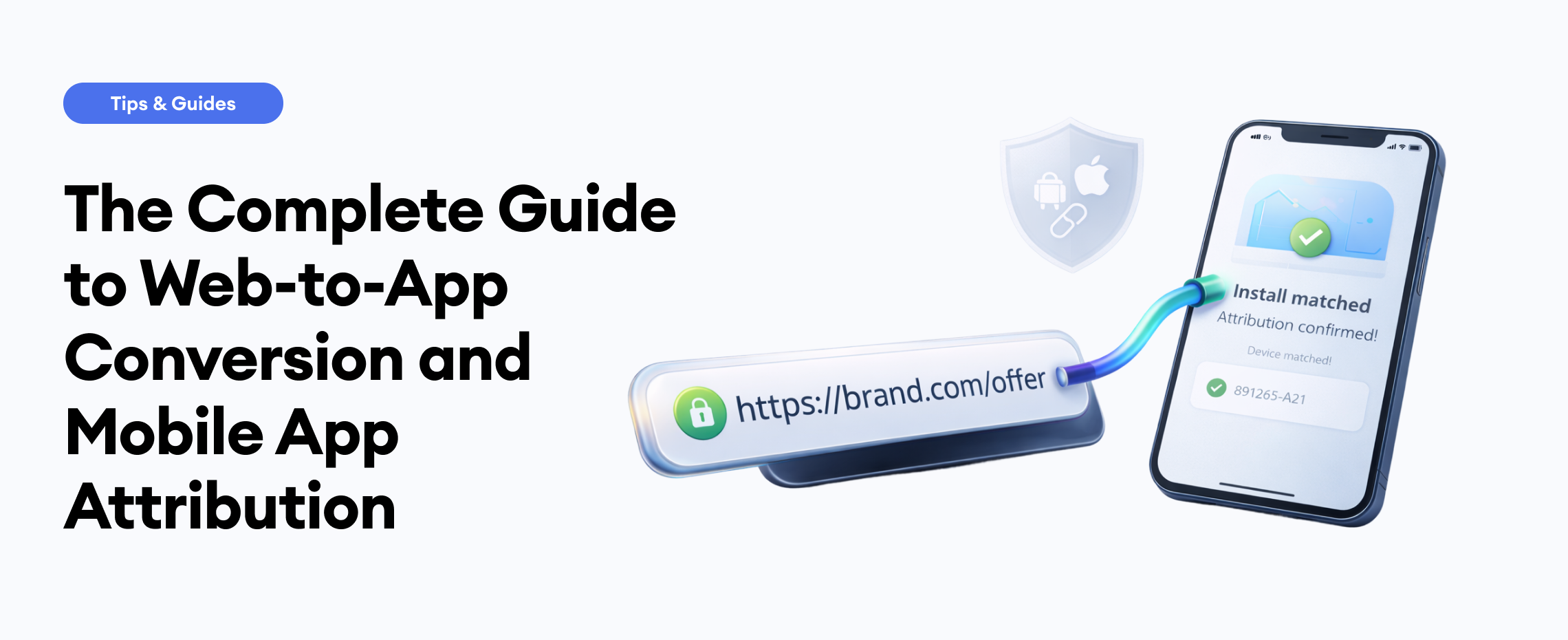
Web-to-app conversion describes the process of moving users from a mobile website or campaign landing page into a mobile application. Ideally, the transition feels instant and natural. In reality, multiple systems must work together, including ad platforms, tracking links, attribution providers, SDKs, and operating system routing.

When implemented correctly, the experience is simple. A user clicks a link and lands directly inside the relevant screen of the app. Behind the scenes, the click is recorded, matched to a device, connected to an install if necessary, and later tied to in-app events.

Apps typically outperform mobile websites in engagement, retention, and lifetime value. However, without strong deep linking and attribution, teams lose visibility into which campaigns, keywords, or affiliates actually drive revenue.

Universal links play a central role in preventing that loss of visibility.

How mobile app attribution works

Mobile app attribution identifies which marketing touchpoint led to an install or in-app action. The objective is to assign credit accurately so teams can optimize spend and increase return on ad spend.

At a high level, the process follows several steps:

  1. A user clicks a tracking link.
  2. The attribution platform records click data and device signals.
  3. The user installs and opens the app.
  4. The SDK inside the app matches the install to the recorded click.
  5. Future in-app events are connected to the original source.

This infrastructure is usually managed by Mobile Measurement Partners such as Affise MMP, AppsFlyer, Adjust, and Branch. These platforms integrate with advertising networks, affiliate systems, and analytics tools to create a unified performance view.

Attribution accuracy depends heavily on reliable link routing. If the operating system does not open the app correctly, the chain breaks. That is precisely what universal links are designed to prevent.

What are universal links

Universal links are Apple’s deep linking framework that allows standard HTTPS links to open specific content inside an app when it is installed. If the app is not installed, the same link automatically falls back to the website.

They were introduced by Apple to replace older custom URL schemes that were unreliable and insecure.

Unlike custom schemes, universal links use standard HTTPS domains and require domain ownership verification. They are handled directly by the operating system, which prevents link hijacking and ensures secure routing. They also provide automatic fallback to the web if the app is not installed.

How universal links support attribution data

Universal links do not perform attribution on their own. Instead, they ensure that users reach the app in a verified and controlled way, providing a seamless transition from web to app. This prevents interruptions or broken tracking that can occur with traditional redirect links and ensures that click data remains intact.

Attribution platforms append tracking parameters to these links and record click data before routing occurs. When the app opens, the installed SDK communicates with the attribution provider and matches the device data to the original click record, ensuring that each interaction is properly captured. This process allows installs and in-app events such as registrations, purchases, or other key actions to be credited to the correct source.

This data is then shared with advertising platforms such as Google Ads and Meta Platforms to support campaign optimization, audience targeting, and budget allocation. Reliable universal link tracking is essential for making informed marketing decisions and measuring campaign performance accurately.

Without stable universal link routing, this matching process becomes inconsistent, particularly in privacy-restricted environments. Broken links, misconfigured domains, or missing tracking parameters can lead to unattributed installs, duplicated events, and unreliable reporting. Maintaining a robust universal link setup is therefore critical for maximizing ROI and ensuring accurate attribution.

Privacy changes and infrastructure quality

Platform privacy updates have reshaped attribution mechanics. iOS privacy frameworks limit access to device identifiers unless users grant permission. As a result, deterministic attribution has become more complex.

In this environment, infrastructure quality is a competitive advantage. Universal links rely on verified domains and operating system-level routing, which helps maintain deterministic transitions when consent is granted.

While attribution models may shift toward aggregated or modeled reporting, broken routing still leads to direct revenue loss. If users cannot move reliably from click to app, no attribution system can compensate for that gap.

Common failures of web-to-app conversion

Web-to-app funnels often fail quietly. Teams may notice declining performance without immediately identifying the root cause.

Frequent issues include:

  • Incorrect Apple App Site Association file configuration
  • Expired or misconfigured SSL certificates
  • Excessive redirect chains
  • In-app browsers interfering with link handling
  • SDK implementation errors

Each of these problems reduces conversion rates and distorts attribution data. Because failures occur between systems, diagnosis requires collaboration between marketing and engineering teams.

Web-to-app conversion and mobile app attribution form the backbone of modern mobile marketing. Universal links ensure that users transition smoothly from web-to-app while preserving the data required for accurate performance measurement.

When implemented correctly, universal links improve user experience, protect attribution accuracy, and safeguard revenue. In a privacy-first ecosystem where deterministic tracking is harder to maintain, strong infrastructure becomes a decisive advantage.

For any organization investing in paid acquisition, affiliate marketing, or performance campaigns, mastering universal links is not just a technical improvement. It is a strategic growth decision.

Frequently Asked Questions

1. What is the difference between deep links and universal links?

Deep links is a broad term that describes links that send users to specific content inside an app. Universal links are Apple’s standardized and secure implementation of deep linking for iOS. Unlike custom URL schemes, universal links use verified HTTPS domains and are handled at the operating system level, which prevents link hijacking and improves routing reliability.

2. Do universal links work if the app is not installed?

Yes. If the app is not installed, the universal link automatically opens the corresponding web page in the browser. This fallback behavior ensures that users still reach relevant content without encountering an error page, while maintaining a consistent user experience.

3. Can universal links function without a mobile attribution platform?

Yes, but attribution visibility will be limited. Universal links manage routing between web and app, but they do not assign marketing credit. To connect installs and in-app events to specific campaigns, you need a mobile measurement partner (MMP) and a properly integrated SDK.

Share this article
Daria Mamchenkova

Written by

Daria is a dedicated Content Writer driven by her passion for crafting crystal-clear articles. Her passion lies in crafting articles that unravel complex concepts and make them easily digestible for readers. She is enthusiastic about acquiring new skills. Daria loves to explore the world of affiliate marketing, helping businesses and readers understand the intricacies of this industry.


Sign up to receive our newsletter

Stay on top of the competition. Let us keep you updated with news, insights, and more

email envelope