






Click Fraud
The deliberate falsification of ad clicks to drain advertiser budgets or artificially inflate performance metrics. In mobile marketing, it primarily affects CPI (cost-per-install) and CPC (cost-per-click) campaigns.
Definion of Click Fraud
Click fraud is a malicious digital advertising practice in which automated scripts, botnets, device farms, or deceitful publishers generate fake, non-human clicks on digital advertisements without any genuine user interest.
In mobile performance marketing, click fraud targets PPC (Pay-Per-Click), CPC (Cost-Per-Click), and CPI (Cost-Per-Install) ad models. The primary motives behind click fraud are to exhaust an advertiser’s budget, artificially inflate publisher revenue, or illegally steal attribution credit for organic app downloads and conversions.
What are the types of click fraud?
The methods used to execute click fraud are varied and sophisticated. They range from simple click farms, where low-wage workers manually click on ads, to advanced bots and automated scripts that can simulate human-like behavior at immense scale.
Here are the common types of click fraud:
-
Click injection: a fraudulent technique where fake clicks are generated just before an app install.
-
Click spamming: fraudulent clicks generated in large volumes in hopes of claiming organic installs.
-
Bot clicks: using automated software to simulate user clicks.
-
Click redirection: a form of ad fraud where a legitimate user’s click on an ad is secretly intercepted and redirected to a different destination before the page loads.
-
Impression fraud: falsely reporting impressions and video ads views as clicks.
The impact of click fraud on campaign performance
In the context of mobile marketing, click fraud directly undermines the integrity of key performance indicators and distorts the true cost of user acquisition.
Within mobile ecosystems, click fraud primarily targets two common campaign models: Cost-Per-Install (CPI) and Cost-Per-Click (CPC). In CPI campaigns, fraudsters generate fake clicks to claim credit for organic installs, siphoning off marketing budgets for users who would have downloaded the app anyway. For CPC campaigns, the goal is simply to drain the advertiser’s budget with no potential for real engagement, as each fake click incurs a direct cost.
The role of MMP in fighting click fraud
A robust MMP employs advanced fraud detection algorithms that analyze a multitude of signals in real-time. These include checking for impossible click-to-install times, identifying suspicious IP addresses and device clusters, and detecting non-human behavior patterns.
By filtering out this fraudulent activity, an MMP ensures that advertisers only pay for genuine clicks and installs, protecting their budgets and providing a clean, accurate dataset for measuring true campaign ROI.
In the ongoing battle against click fraud, the sophisticated tracking and validation capabilities of an MMP are not just an advantage – they are a necessity for any data-driven mobile marketer.
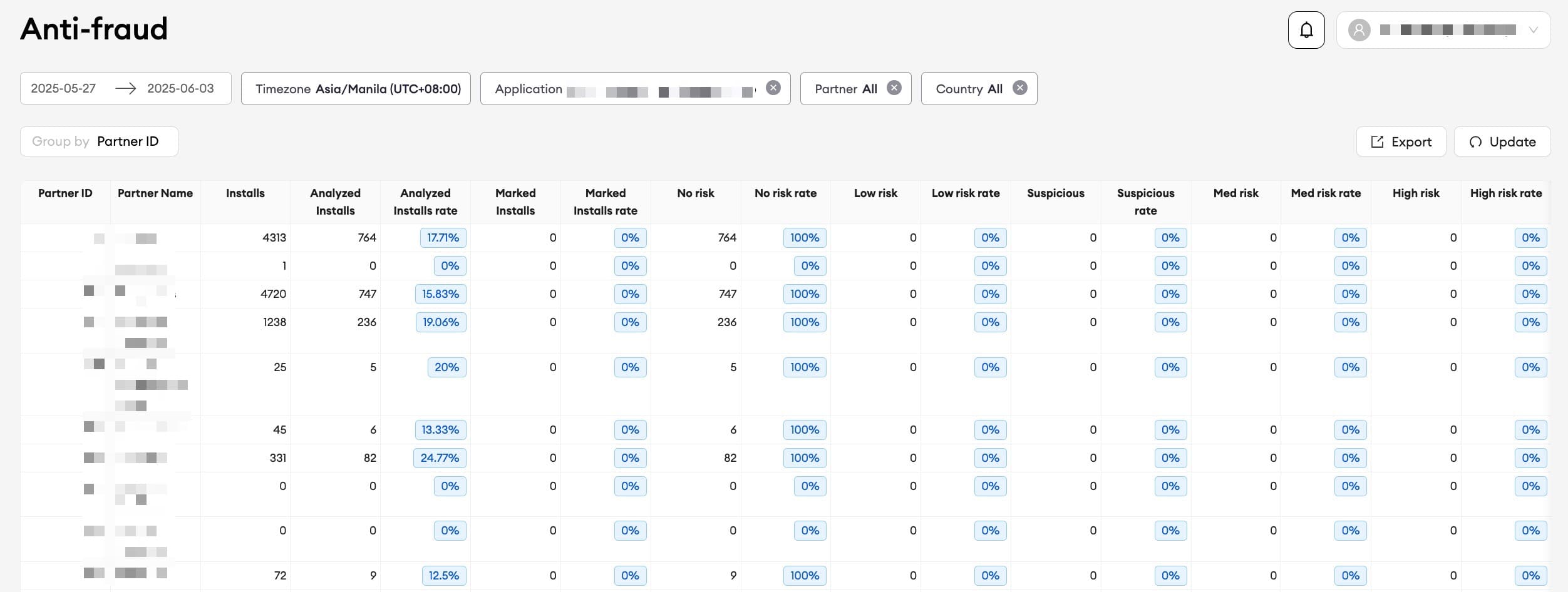
Here is an overview of the Anti-fraud dashboard from Affise MMP interface: